WHY SKIP OUT BUTTER?
WHAT ARE THE POTENTIAL PITFALLS?
Sadly, there are limitations to replacing butter with liquid fats and it’s just not possible across all of our favourite recipes. To best demonstrate this, I’ve looked at a personal favourite (yes you guessed it, the Victoria Sponge is back again), to explore how complicated replacing butter for liquid fat is.
CLASSIC VICTORIA SPONGE
150g Room Temperature Butter
150g Caster Sugar
3 Medium Eggs
150g Self-Raising Flour
ALTERNATIVE VICTORIA SPONGE
175g Self-Raising Flour
1 ½ Tsp Baking Powder
140 Golden Caster Sugar
25g Ground Almonds
2 Large Eggs
175g Natural Yoghurt
25g Vegetable Oil
In a Classic Victoria Sponge recipe , the use of physical aeration to create the fluffy sponge texture is dependent on the butter and sugar in the recipe. In the second recipe we are unable to achieve a ‘like for like’ texture because we don’t have the butter in the recipe to incorporate this air into the mixture. The basic chemistry is missing. We can use a raising agent (the baking powder) to try to achieve the same rise, but this isn’t only where the second recipe falls short. In our first recipe, the butter isn’t only used for texture but for flavour. The sugar provides the sweetness, the flour the stability, and the butter and eggs provide both textural qualities but also flavour. When we no longer have the butter to provide this rich flavour, we must look at other ingredients. In our second recipe we have to use a number of different ingredients to do this- the ground almonds, yoghurt and eggs. So much work to try to recreate this recipe it hardly seems worth it when there are other recipes which forgo butter (and the principles of the Victoria Sponge) and are excellent in their own right.
However, all is not lost. Through a deeper knowledge of other recipes beyond the Victoria sponge we can start a journey in using liquid fats in our baking to yield delicious results!
BUT WHAT ARE THESE OTHER LIQUID FATS?
WHY BOTHER IN THE FIRST PLACE?
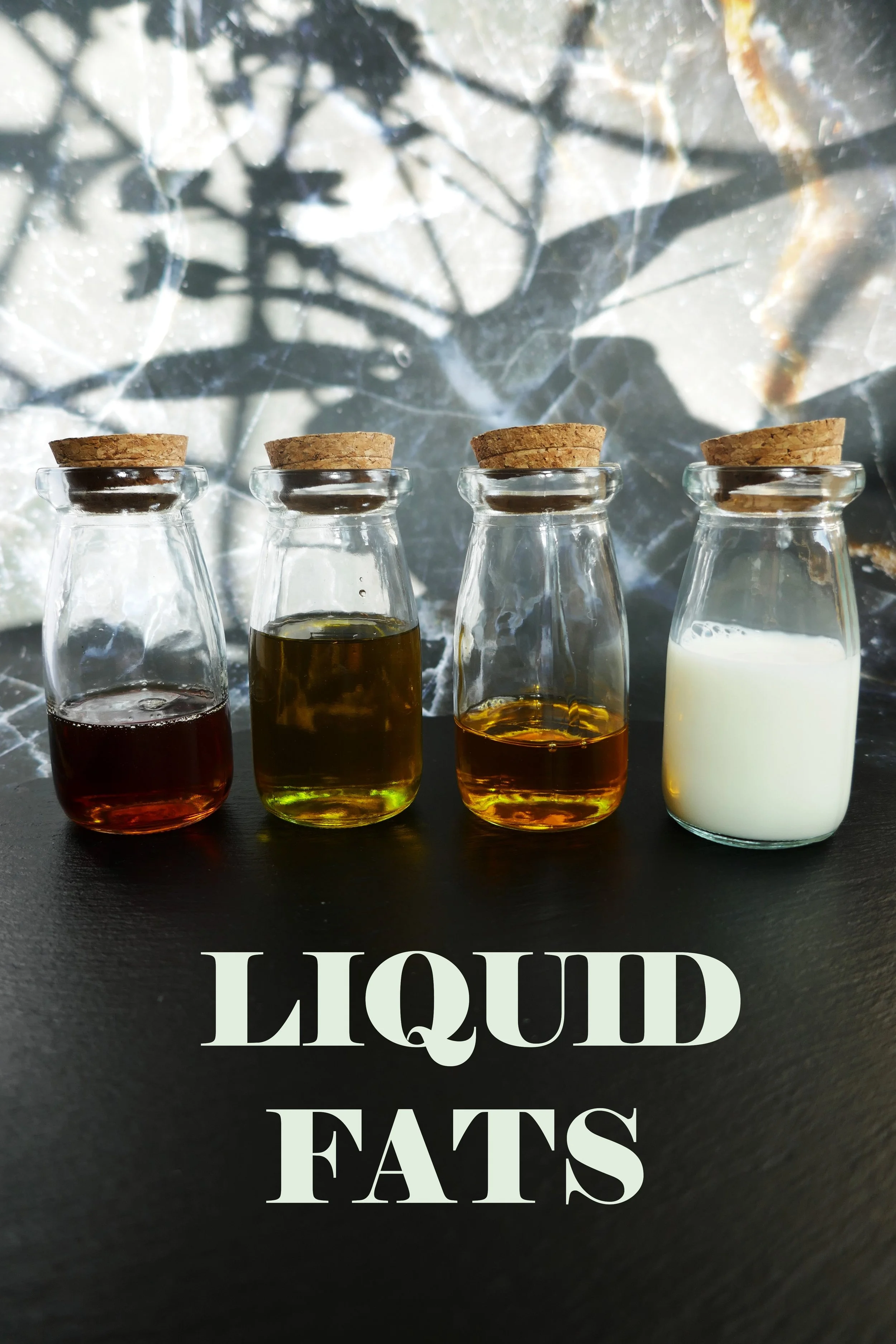
Although the breadth of vegetable, seed, and nut oils available commercially has grown exponentially in the last 20 years, they are not the only form of liquid fat which we can use in place of butter. Ranging from these oils to yoghurt and milks, the variety of liquid fats can offer an array of different flavours which can really enhance particular recipes and not just be seen as butter alternatives. For examples, take a look back at some recipes already explored and think is it possible to replace say melted butter in a recipe with a nut oil for a completely different flavour profile? Or how about adding a sour note to a rich chocolate ganache by replacing cream with buttermilk? Below I’ve included a brief list of the different types of liquid fats we can use in baking, ones which I particularly recommend and have many a success with, however you are welcome to experiment in your own kitchen how you please!
Vegetable Oils (Olive, compound and mixed neutral oils)
Nut Oils (Peanut, Ground Nut, Walnut, etc)
Seed Oils (Rapeseed, Sunflower, Sesame etc)
Thick/ Set Dairy (Yoghurt & Sour Cream, Crème Fraiche and set non-dairy options)
Liquid Dairy (Buttermilk, Milk & Cream, non-dairy options included)
Right enough with all this chat. LET’S MAKE SOME THINGS SHALL WE?!
