THE SANDING METHOD
On familiar ground but where can we really go with this method?
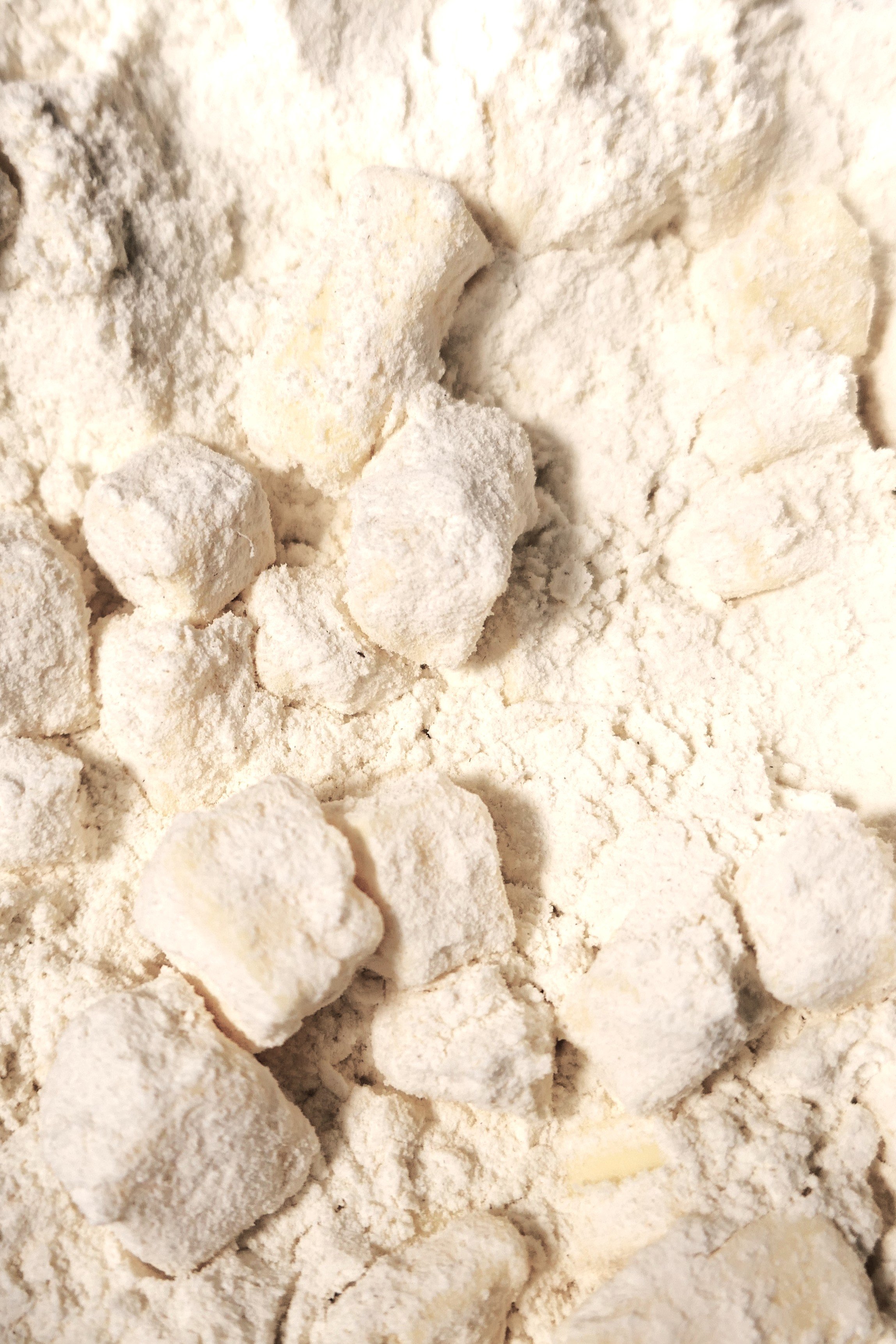
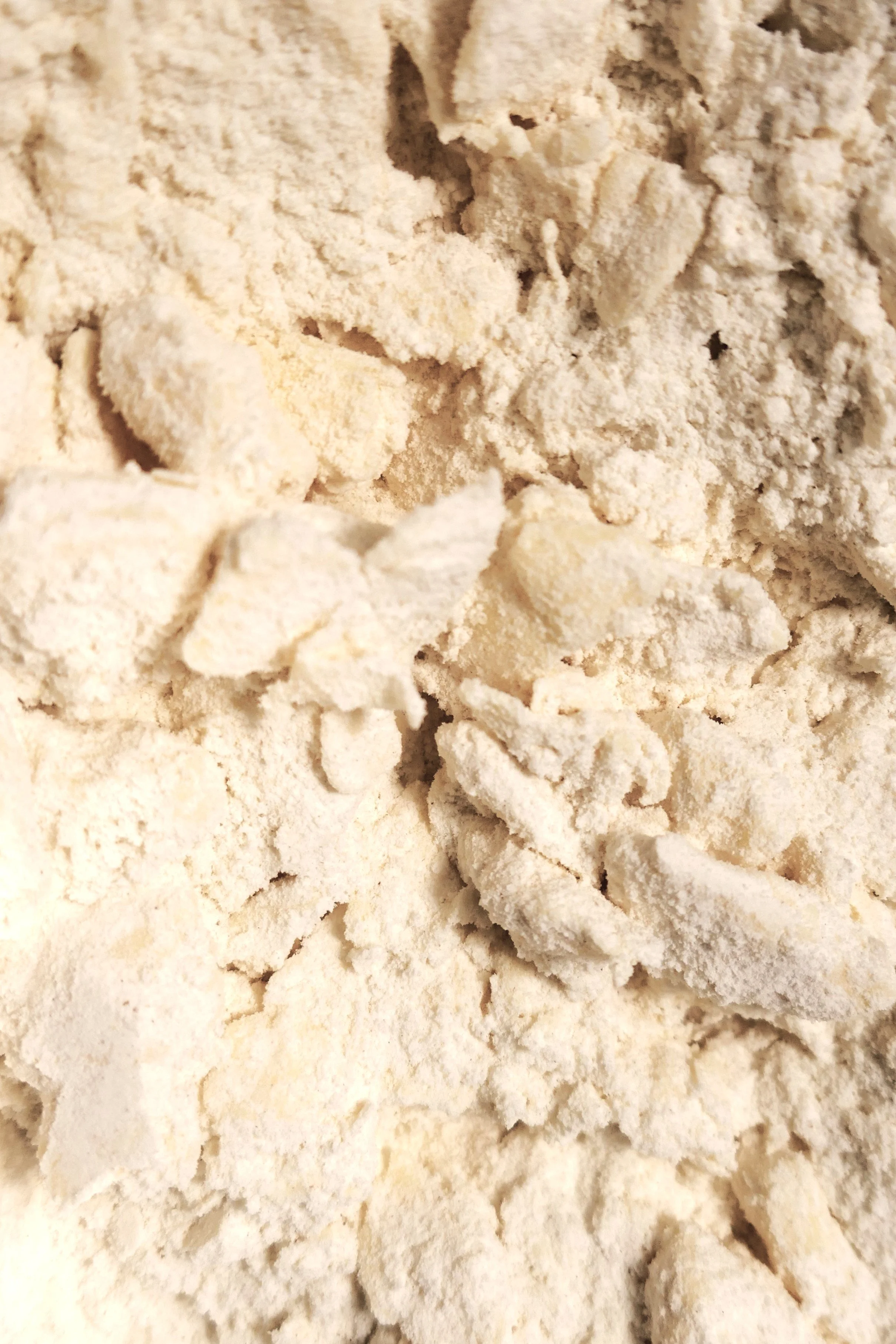
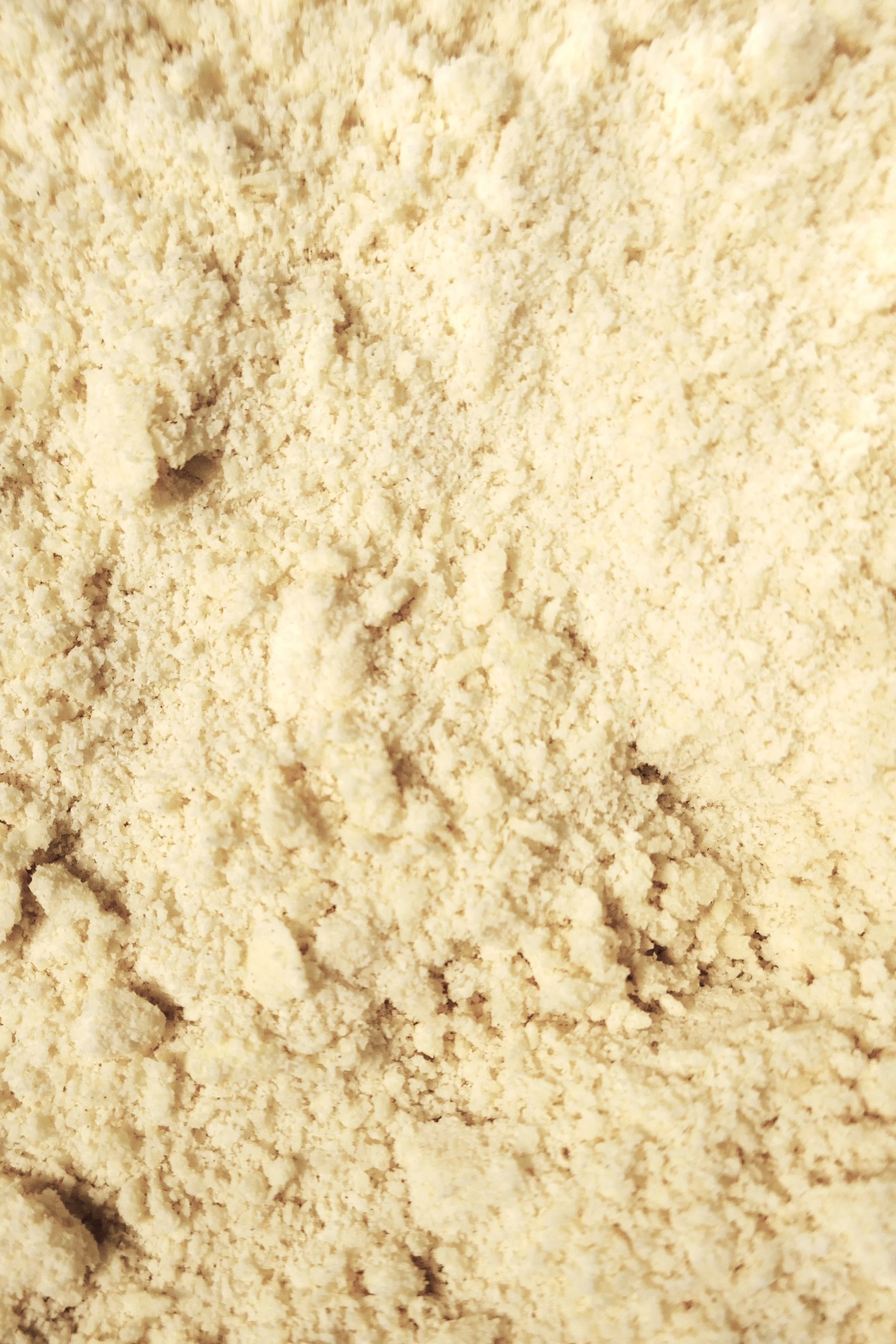
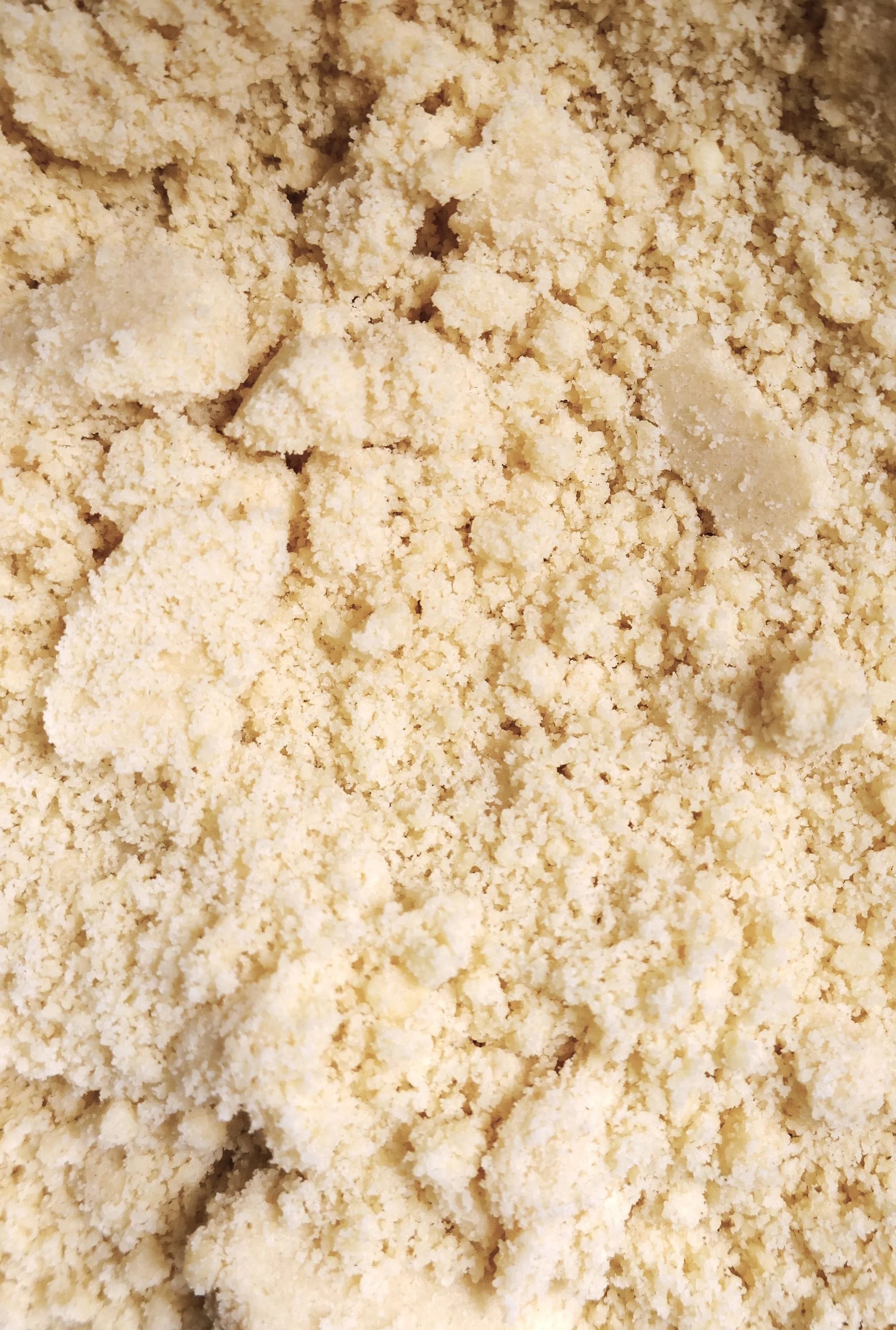
For our second section looking at cold butter in baking, we will take a deep dive into the “sanding” method. Much more versatile than its counterpart the “sanding” method is predominantly used for pastry and biscuits but is also a great way to make muffins, crumbles, and small cakes. The “sanding” method simply put, is the process of sanding (or rubbing) cold cubed butter into flour at the beginning of the recipe until you have a sand-like consistency. This is then followed by the addition of liquid to create your batter or dough.
TIP TOP TIP:COAT YOUR BUTTER WITH FLOUR BEFORE SANDING
During this initial sanding process, the butter coats the fine flour particles so that when the liquid is added it inhibits the formation of gluten strands from the flour (because the fat in the butter repels water, due to its hydrophobic qualities). Through this sanding process, we not only introduce a tasty ingredient into our baked creation; by preventing gluten strand formation we are able to create textures which are softer and less chewy (i.e. better).
TIP TOP TIP:THE SMALLER THE BUTTER CUBE. THE EASIER TO SAND
This technique to prevent gluten strand formation isn’t exclusively useful for just doughs and pastries, it’s also a very interesting technique to help create cakes and sponges. Coming up in this section I’ve included two basic cake recipes, the first is your classic sponge recipe and the second is for muffins, exploring in the recipes themselves what is actually happening when we employ a method that doesn’t necessarily ‘fit’ our expectations (WE’RE NOT STARTING WITH BUTTER AND SUGAR!?)
